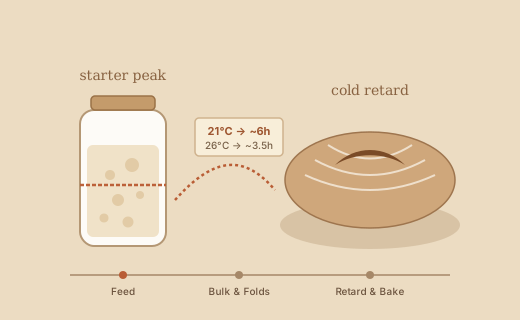
Ambient temperature dictates fermentation speed
Sourdough yeast and lactic acid bacteria are intensely temperature-sensitive. At a cooler ambient room temperature of 21°C (70°F), bulk fermentation typically requires around 6 hours for a standard 20% inoculation dough. In a warm kitchen at 26°C (78°F), the same dough reaches the same degree of aeration in roughly 3.5 hours.
Microbial metabolic rates roughly double every 8–10°C. Sourdough timelines must therefore scale inversely with ambient temperature. Planning a bake without accounting for room temperature leads to either flat, dense underproofed loaves or sour, slack overproofed dough that collapses in the oven.
Inoculation percentage as a fermentation throttle
Inoculation refers to the baker’s percentage of mature starter added relative to total flour. While 20% is the standard benchmark for artisan sourdough formulas, adjusting starter percentage provides a practical throttle on your schedule.
Lowering inoculation to 10–15% stretches out bulk fermentation, giving you more flexibility during a workday. Increasing inoculation to 25–30% accelerates the rise when baking on a tighter schedule. Our calculator models this relationship alongside temperature so you can coordinate your bake with confidence.
A starter fed at a 1:1:1 or 1:2:2 ratio typically peaks in 4 to 6 hours at room temperature. Timing your autolyse so it finishes right as your starter reaches its bubbly, domed peak ensures maximum microbial vigor at mix time.
Front-loading structure with stretch & folds
In artisan sourdough methods, gluten development happens through gentle stretch-and-fold sets during early bulk fermentation rather than aggressive machine kneading. Scheduling 4 sets spaced 30 minutes apart across the first two hours develops dough elasticity and gas retention while the dough is easiest to handle.
After the final set, the dough should rest undisturbed for the remainder of bulk fermentation. This uninterrupted rest allows gas bubbles to coalesce into an airy, open crumb without tearing the delicate gluten mesh before shaping.
Cold retarding gives flavor and schedule freedom
After shaping into a banneton, transferring dough to a 3–4°C (37–39°F) refrigerator virtually halts yeast activity while lactic and acetic acid bacteria continue slowly producing organic acids. A cold retard of 12 to 16 hours creates complex aromatic depth, a blistered artisan crust, and firms up the dough for effortless razor scoring.
Most importantly, cold proofing decouples dough preparation from baking. By working backward from your desired bake time, you can prep dough on Friday evening and bake fresh, blistered loaves on Saturday morning.
References & further reading
These references support the ingredient and pan context. The worked numbers and diagrams above are our own explanatory examples.